| |
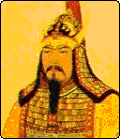
pic) King Gwanggaeto |
King
Gwanggaeto (meaning "broad expander of territory")
was born in 374 and ascended to the throne in
391, at the age of just seventeen, to become the
19th king of the Goguryeo Dynasty. He ruled over
Goguryeo at the time in Korea's history known
as The Three Kingdoms, so called because during
this time the Korean peninsula was constantly
being fought over by the three Goguryeo, Silla
and Baekje dynasties. He is sometimes referred
to as Great King Yeongnak, after the era name
selected by him.
He expanded Goguryeo's territories far into the
Korean peninsula by advancing southward at the
expense of the Baekje dynasty to occupy the north
of the Han River, and occupied Manchurian territory
to the east of Liaohe. On his death in 413, at
just 39 years of age, Goguryeo ruled everything
between the Sungari and Han Rivers. This gave
it control over two thirds of what is now modern
Korea as well as a large part of Manchuria. In
addition, the chieftains of Silla submitted to
the northern kingdom's authority in 399 to receive
protection from Japanese raids. Only Paekche continued
to resist Koguryo domination during this period,
thereby preventing what would have been the first
recognised unification of the Korean peninsula.
During his reign, King Gwanggaeto conquered 65
walled cities and some 1,400 villages, in addition
to aiding Silla when it was attacked by the Japanese.
In 392 he built nine Buddhist temples in Pyongyang.
His accomplishments are recorded on a monument
which was erected in 414 in southern Manchuria.
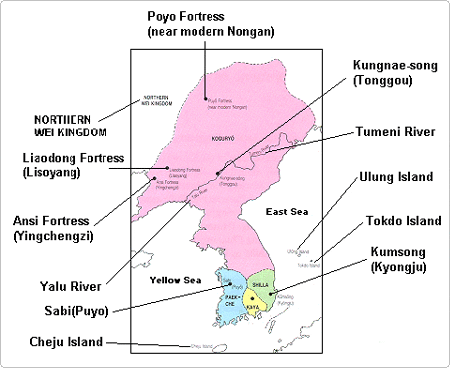
pic) Koguryo Expansion in
the 5th Century
|
|






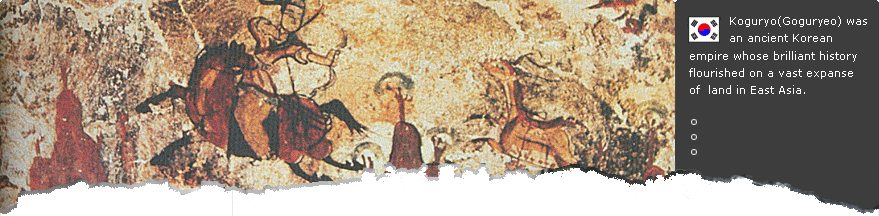


 King Kwanggaeto The Great